THE NJIT SWAB
Efficiency And Optimization
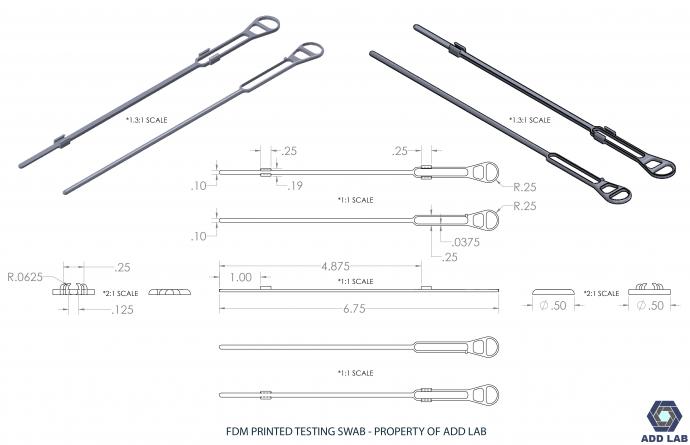
The NJIT swab is designed to address the many distinct needs of the COVID-19 induced swab supply shortage. Firstly, its design is optimized in terms of weight and volume, which translates to reduced print times and therefore improved distribution channels. With each unit requiring only 2 grams of PLA filament, cost has been reduced to pennies, approximately 4 cents per unit. With hospitals around the world experiencing shortages of testing swabs, it’s important that whatever solution we offer exists in a fashion that is accessible, affordable, and rapidly deployable for the best results.
Adaptation
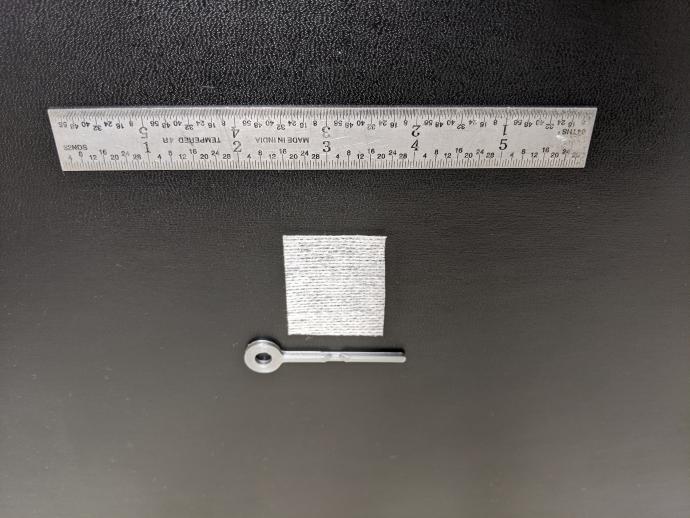
This design also conforms to the shortage of available swabbing materials. The Rayon or Dacron bulbs that adorn your typical testing swab are in just as short of supply as the swabs themselves, so the NJIT swab has built itself around what can be sourced. Our team found that Rayon sheets versus spun tips were still in wide availability, and so the NJIT swab was designed to use sections of these sheets as a stand-in for traditional rayon tips. The 1.25” by 2” section needed from a standard size rayon sheet bares a cost of roughly half a cent.
Innovation
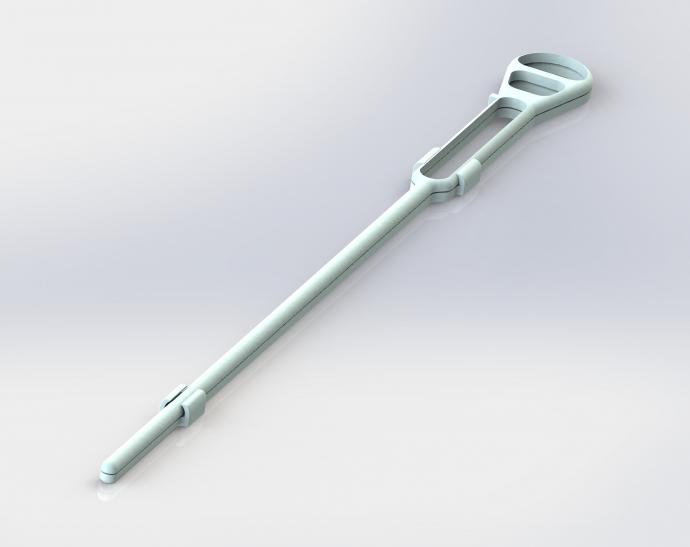
Our team took this opportunity to not only find a viable replacement for testing swabs, but to improve on them as well. The NJIT Swab eliminates an entire step in the traditional swabbing process, by removing the need to cut the spent tip off with a pair of scissors. Current swabs, once a sample has been taken, need to have the rayon tip cut down to fit inside the transport vial. This makes the process a two handed measure, as well as adds time to each step and risk of contamination. Our patent pending slider arm mechanism allows the tester to use and deposit each sample one handedly, and from the full distance of the swab’s length.