Major Oil Spill Remediation Studies
Remediation strategies for most catastrophic oil spills.
CNR has been actively involved in analyzing and supporting remediation strategies for some of the most catastrophic oil spills in recent history. These efforts combine field investigation, modeling, and policy insights to develop actionable mitigation approaches.
Exxon Valdez Oil Spill
We investigated the long-term persistence of Exxon Valdez oil in Prince William Sound, identifying how compacted beach sediments and low nutrient and oxygen levels hindered biodegradation. Our work highlighted the need for targeted delivery of oxygen and nutrients to enhance natural attenuation in impacted shorelines.
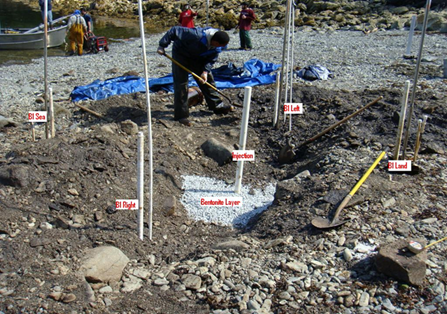

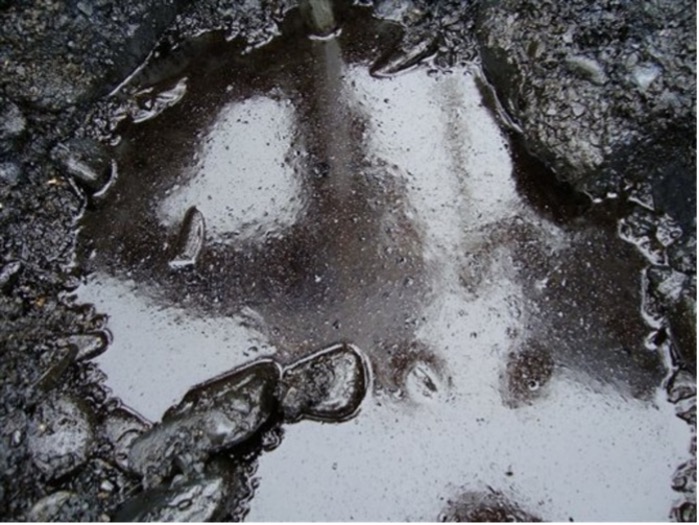
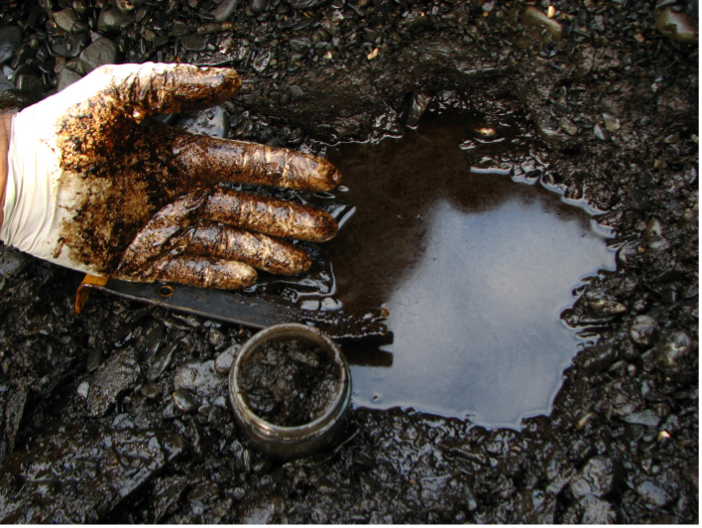
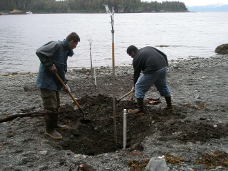
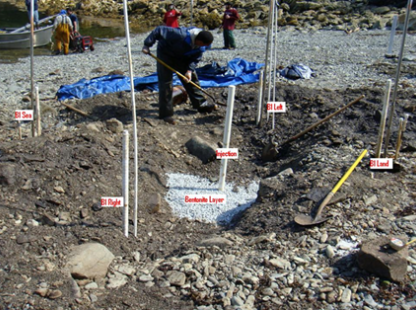
Field investigations at Eleanor Island, in Prince William Sound, identified subsurface oil layers that persisted for decades after the initial spill event.
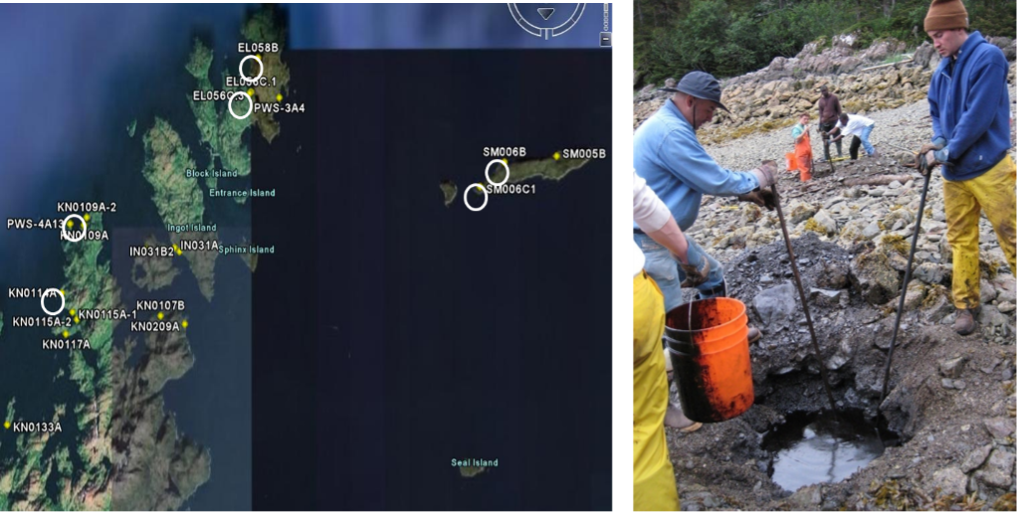
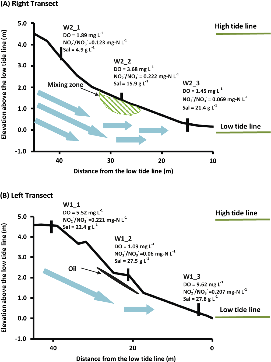
These layers, located beneath permeable upper sediments, became anoxic, significantly slowing natural biodegradation processes. Key findings included rapid changes in water table elevations due to tidal influences.
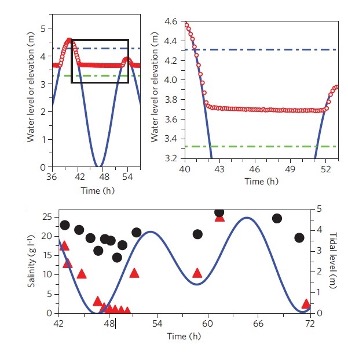
At Eleanor Island, subsurface oil persistence correlated directly with severely limited nutrient (nitrogen and phosphorus) and oxygen concentrations. Contaminated zones recorded oxygen levels around ~1 mg/L compared to over 5 mg/L in uncontaminated areas, both below optimal thresholds for biodegradation. Nutrient levels recorded were significantly below the optimal concentrations required for effective biodegradation (nitrogen: 2–10 mg/L, phosphorus: 0.4–2 mg/L), thus identifying these as major limiting factors.
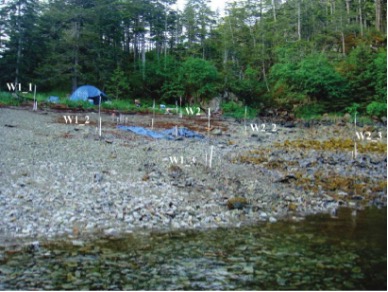
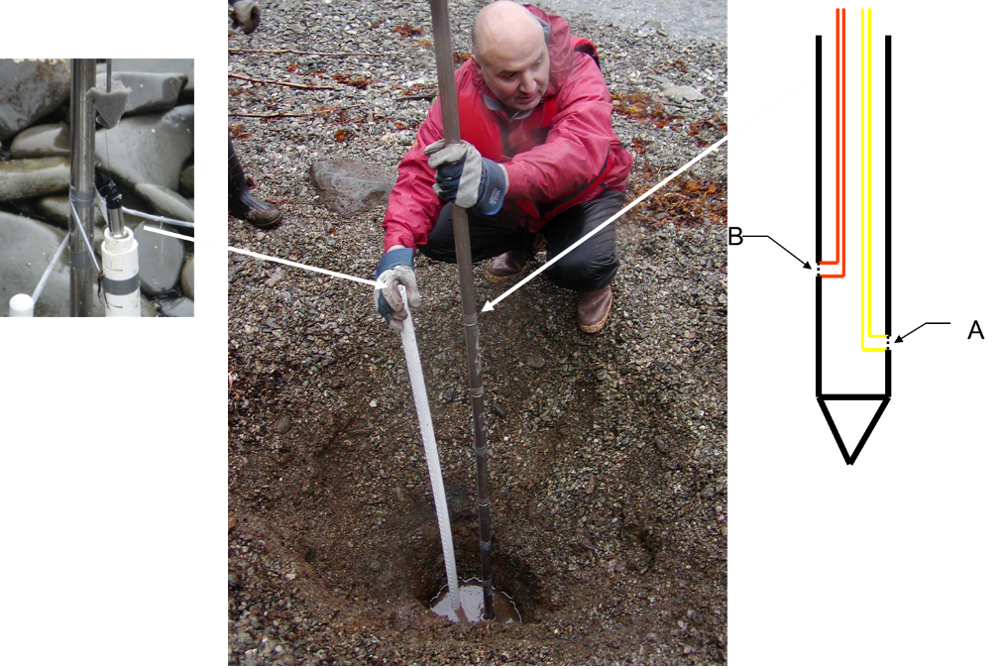
Analysis of pore water chemistry indicated that oxygen depletion and nutrient scarcity significantly reduced microbial degradation efficiency.
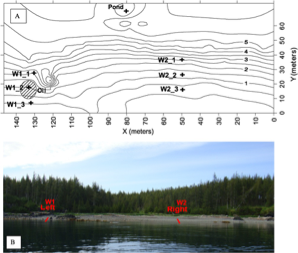
Field measurements consistently found dissolved oxygen near anoxic levels (~1 mg/L) and low nutrient availability (~0.45 mg-N/L, ~0.03 mg-P/L), substantially hindering natural biodegradation.
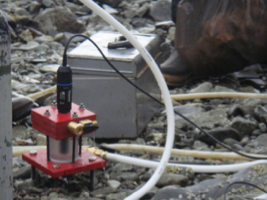
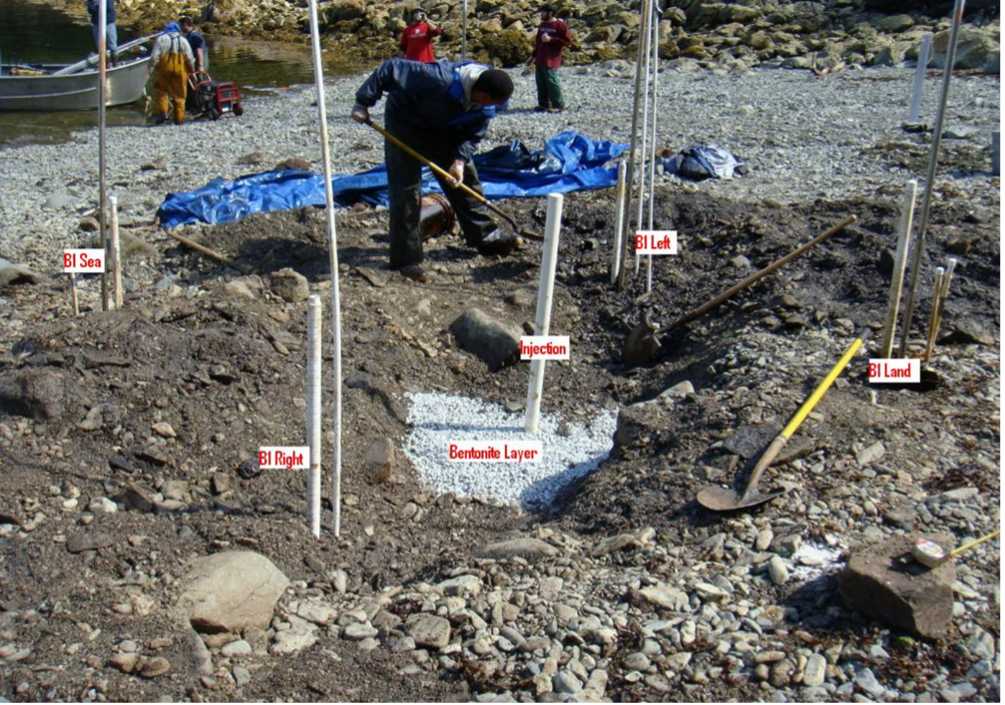
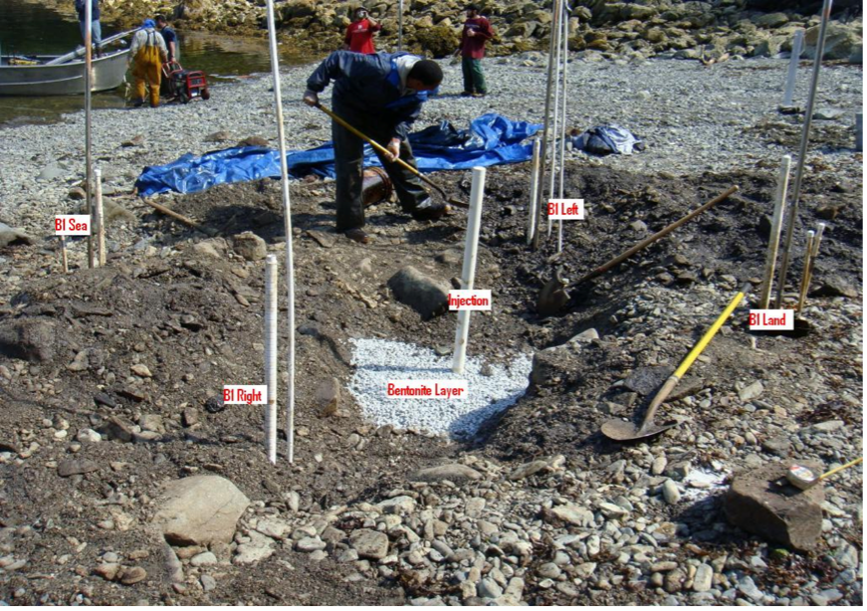
We explored High-Pressure Injection (HPI) as a technique to deliver chemicals directly into contaminated sediment layers to overcome natural limitations to biodegradation.
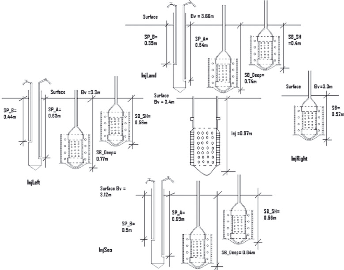
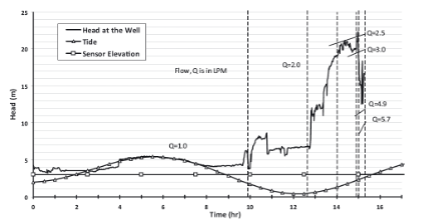
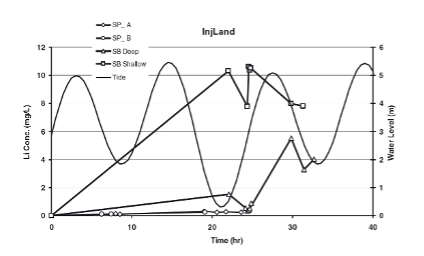
Field experiments demonstrated successful injection at depths around 1 meter into sediments, using a lithium tracer to visualize plume dispersion. The injected plume rapidly occupied approximately 12 m² within 24 hours, moving predominantly seaward at a rate of 10 m/day. The findings indicated that chemical injection is a promising strategy for enhancing biodegradation at contaminated sites where natural attenuation is severely limited.
Publications:
- Boufadel, M. C., Geng, X., & Short, J. (2016). Bioremediation of the Exxon Valdez oil in Prince William Sound beaches. Marine Pollution Bulletin, 113(1–2), 156–164. https://doi.org/10.1016/j.marpolbul.2016.08.086
- Sharifi, Y., Van Aken, B., & Boufadel, M. C. (2011). The effect of pore water chemistry on the biodegradation of the Exxon Valdez oil spill. Water Quality, Exposure and Health, 2, 157–168. https://doi.org/10.1007/s12403-010-0033-4
- Boufadel, M. C., Bobo, A. M., & Xia, Y. (2011). Feasibility of deep nutrients delivery into a Prince William Sound beach for the bioremediation of the Exxon Valdez oil spill. Groundwater Monitoring & Remediation, 31(2), 80–91. https://doi.org/10.1111/j.1745-6592.2011.01335.x
- Li, H., & Boufadel, M. C. (2010). Long-term persistence of oil from the Exxon Valdez spill in two-layer beaches. Nature Geoscience, 3(2), 96–99. https://doi.org/10.1038/ngeo749
- Boufadel, M. C., Sharifi, Y., Van Aken, B., Wrenn, B. A., & Lee, K. (2010). Nutrient and oxygen concentrations within the sediments of an Alaskan beach polluted with the Exxon Valdez oil spill. Environmental Science & Technology, 44(19), 7418–7424. https://doi.org/10.1021/es102046n
Deepwater Horizon
CNR contributed critical scientific insights into shoreline oil behavior following the Deepwater Horizon spill, with a particular focus on coastal sediment contamination and in-situ biodegradation. Our field investigations documented how oil was transported and entrapped within beach sediments, primarily driven by wave action during storm events. Notably, the supratidal zones of beaches exhibited substantial oil entrapment, highlighting critical areas for remediation focus.
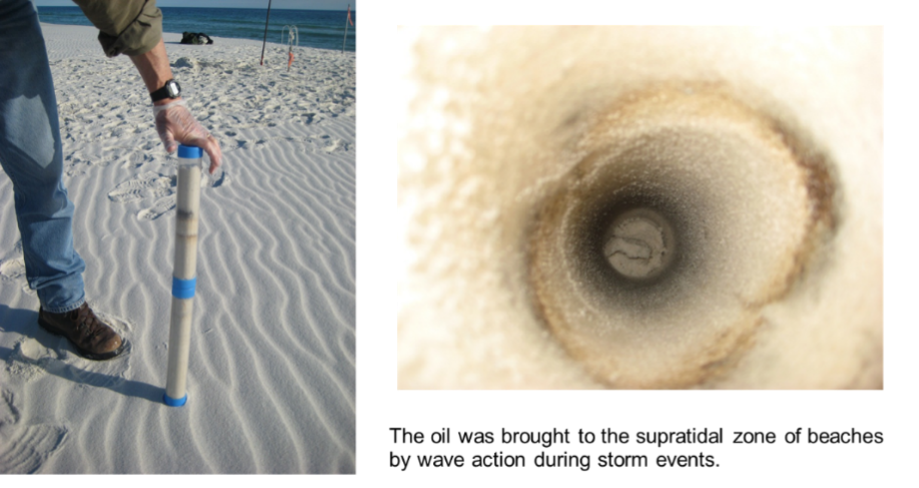
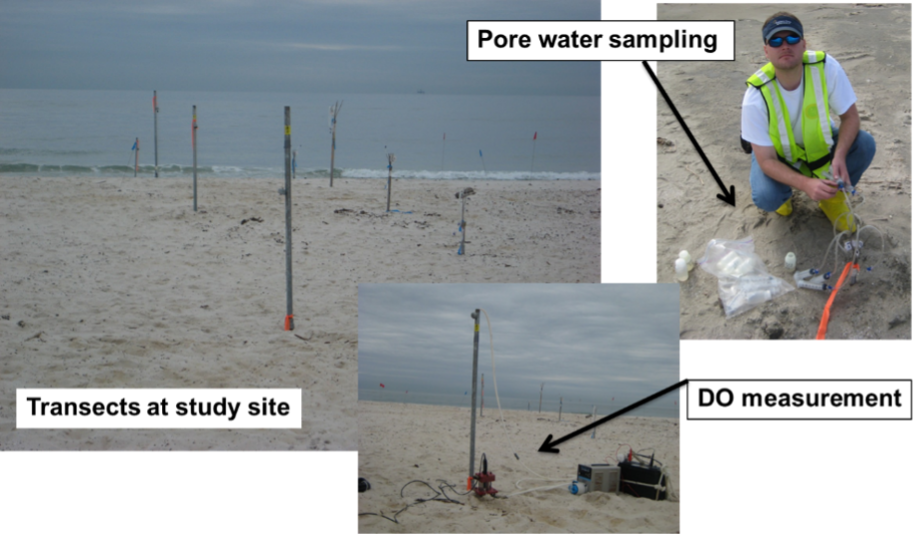
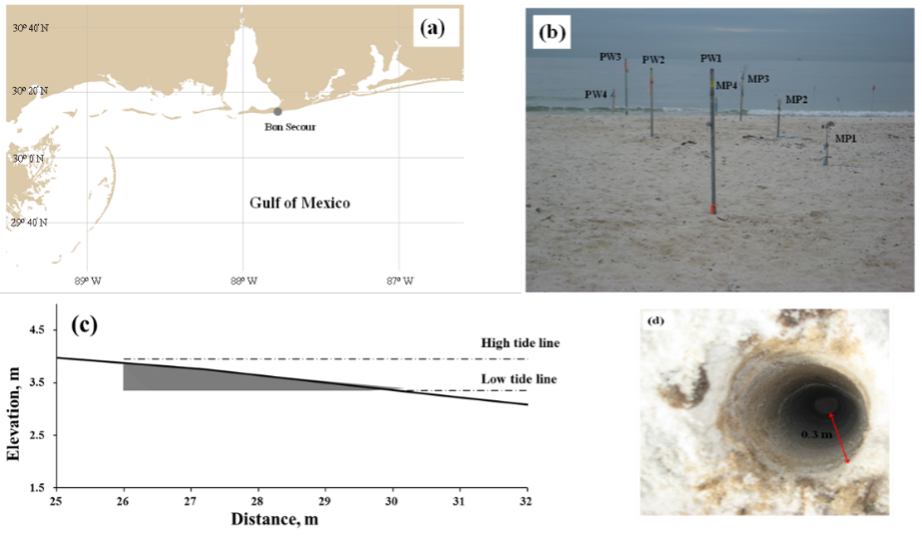
We carried out extensive pore water sampling and dissolved oxygen (DO) measurements along defined transects at impacted sites. Results showed active biodegradation within the intertidal and unsaturated zones, but it was constrained in supratidal sediments due to oxygen depletion and reduced microbial activity, demonstrating the natural attenuation capacity of Gulf of Mexico beaches under favorable conditions.
Publications:
- Geng, X., Khalil, C. A., Prince, R. C., Lee, K., An, C., & Boufadel, M. C. (2021). Hypersaline pore water in Gulf of Mexico beaches prevented efficient biodegradation of Deepwater Horizon beached oil.Environmental science & technology,55(20), 13792-13801. https://doi.org/10.1021/acs.est.1c02760
- Boufadel, M. C., Gao, F., Zhao, L., Özgökmen, T., Miller, R., King, T., ... & Leifer, I. (2018). Was the Deepwater Horizon well discharge churn flow? Implications on the estimation of the oil discharge and droplet size distribution. Geophysical Research Letters, 45(5), 2396-2403. https://doi.org/10.1002/2017GL076606
Ecuador Oil Spill
Assessed the environmental and hydrological impact of pipeline ruptures in remote rainforest regions, focusing on oil transport through fractured soils and natural attenuation potential.
Enbridge Line 6B Oil Spill
Evaluated submerged oil behavior in freshwater systems, with emphasis on sediment interaction and the effectiveness of dredging and containment efforts in riverine environments.
For other CNR Areas of Interest, Check out here.