People
Director, Principal Investigator
Tara Alvarez, Ph.D., FAAO, FAIMBE, FNAI, is a distinguished professor of biomedical engineering, director and founder of the Vision and Neural Engineering Laboratory. After her Ph.D. (BME, Rutgers) and research at Bell Labs (1998-2001), she helped found NJIT’s BME Department in 2001. Her laboratory seeks to understand fundamental mechanisms of vergence rehabilitation. She founded the start-up company OculoMotor Technologies Inc. (OMT) and is currently the chief scientific officer. With her alumni, OMT is developing a system using virtual reality to diagnose and rehabilitate oculomotor motility dysfunctions. She is a fellow of the American Institute of Medical and Biological Engineering and the National Academy of Inventors. She is a Diplomate of the BVPPO Section of the American Academy of Optometry. She is currently funded through an NIH R01 and DoD grant to study the effectiveness of Office-Based Vergence and Accommodative Therapy in those with persistent post-concussive symptoms and convergence insufficiency. The mission of her research is to understand the underlying neural mechanisms that lead to a sustained reduction in visual symptoms and to take that knowledge, integrated with technology, to develop new diagnostic and therapeutic interventions that can be used for personalized point-of-care.
Research Coordinator

Melissa Noble, MSW
melissa.noble@njit.edu
Melissa Noble is the research coordinator, handling trial administration, participant recruitment, and data management.
Postdoctoral Research Associate
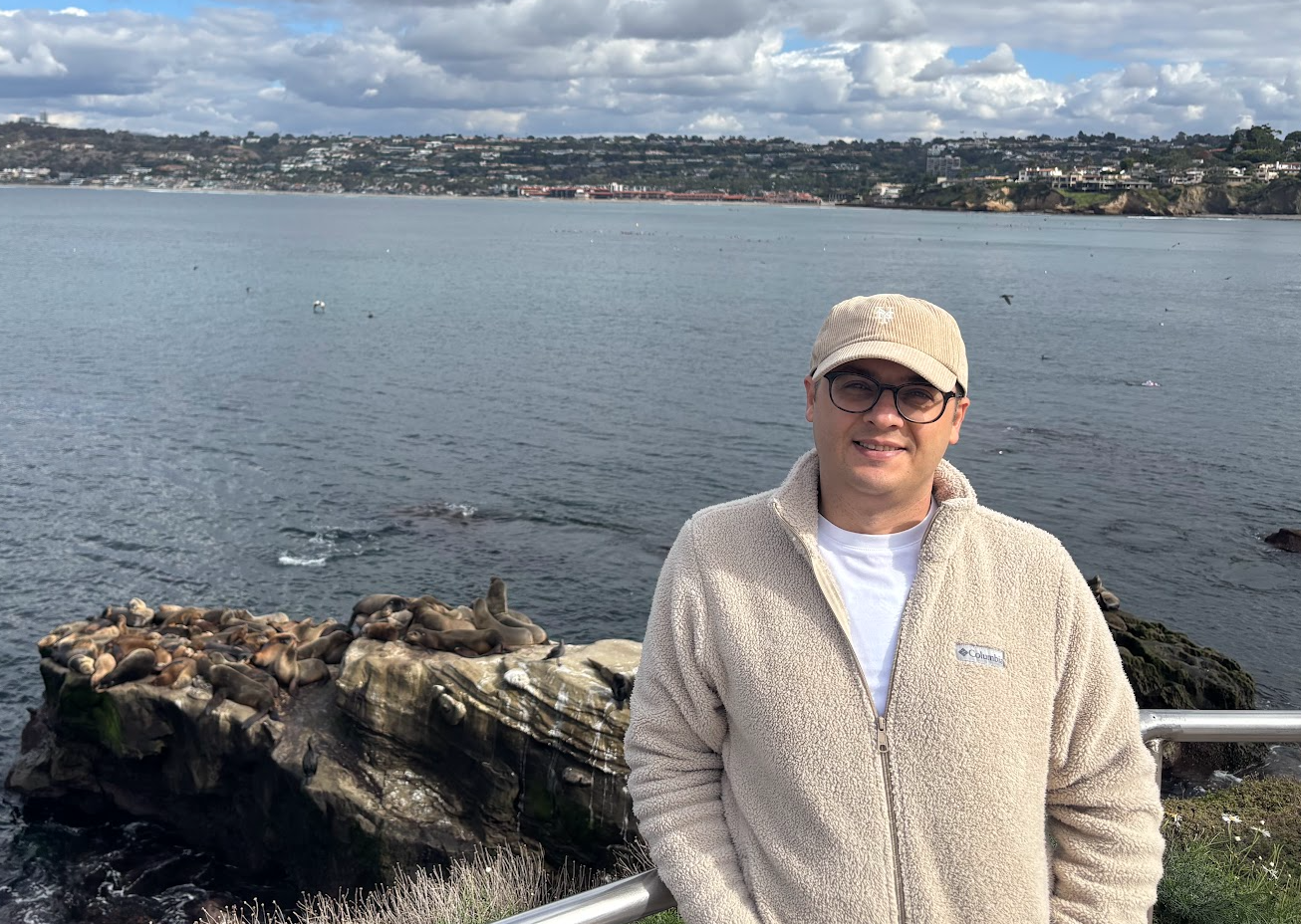
Farzin Hajebrahimi, Ph.D.
farzin.hajebrahimi@njit.edu
Farzin Hajebrahimi is a postdoctoral research associate whose work bridges computational network neuroscience and clinical populations. His research focuses on understanding the neural mechanisms underlying neurological disorders using functional magnetic resonance imaging (fMRI), and on how rehabilitative approaches can normalize altered functional activity and connectivity. He combines computational network models with fMRI and longitudinal clinical-trial data in concussion and early Parkinson’s disease. He earned his Ph.D. in 2020 and, during his doctoral training, received awards from the Federation of European Neuroscience Societies, the Human Brain Project, and the University of Bordeaux. In 2023, he joined Rutgers University as a postdoctoral research fellow in the Department of Health Informatics and later that year moved to the Vision and Neural Engineering Laboratory in NJIT’s Department of Biomedical Engineering, where he studies patients with post-concussion syndrome. His prior research in Parkinson’s disease investigated how fMRI can stratify stages of cognitive impairment and evaluated innovative interventions such as virtual reality-based training. His research mission is to use fMRI to uncover the mechanisms of neurological disorders and to evaluate how non-invasive therapeutic approaches can modify disease.