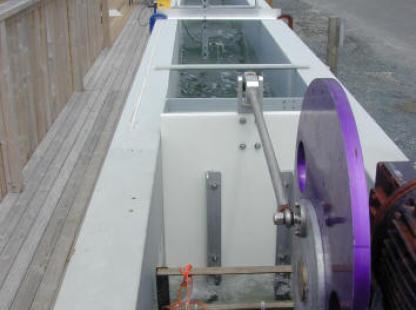
Wave Tank
A sub-topic of Offshore Pollutant Mitigation
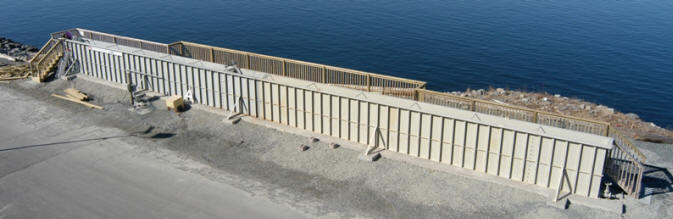
3/4 overhead view of the wave tank
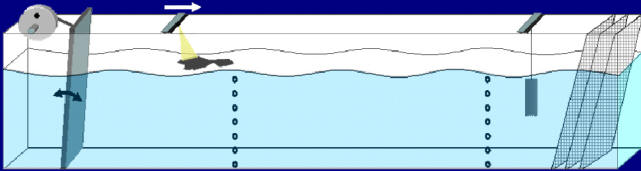
Schematic representation of the wave tank
A wave tank was constructed to simulate deep water waves and their affects on oil slicks. The 32 m long by 2 m deep by 0.6 m wide tank is located at the Bedford Institute of Oceanography in Halifax, Canada. The tank is capable of producing waves of user specified durations and frequencies. The waves are produced by a flap with an adjustable stroke controlled by an eccentric flywheel. The waves propagate the length of the tank and are "absorbed" downstream be a series of screens. These absorbers help minimize reflection of the waves off the end wall of the tank. Oil is dispensed above the water surface and allowed to mix with dispersants.
Visual mixing In wave tank
About 14,000 pieces of physical tracer pieces with dimension 0.5 cm X 0.5 cm were placed on the water surface and tracked using a video camera. The pieces constituted a good tracer because their density was essentially equal to that of water (slightly lighter). The results indicate that the plume (simulating oil droplets) gets divided into two parts, one of them moves upstream. This can be seen by clicking the video link below.
Video of wave tank mixing 14000 tracer pieces
Wave Tank Team
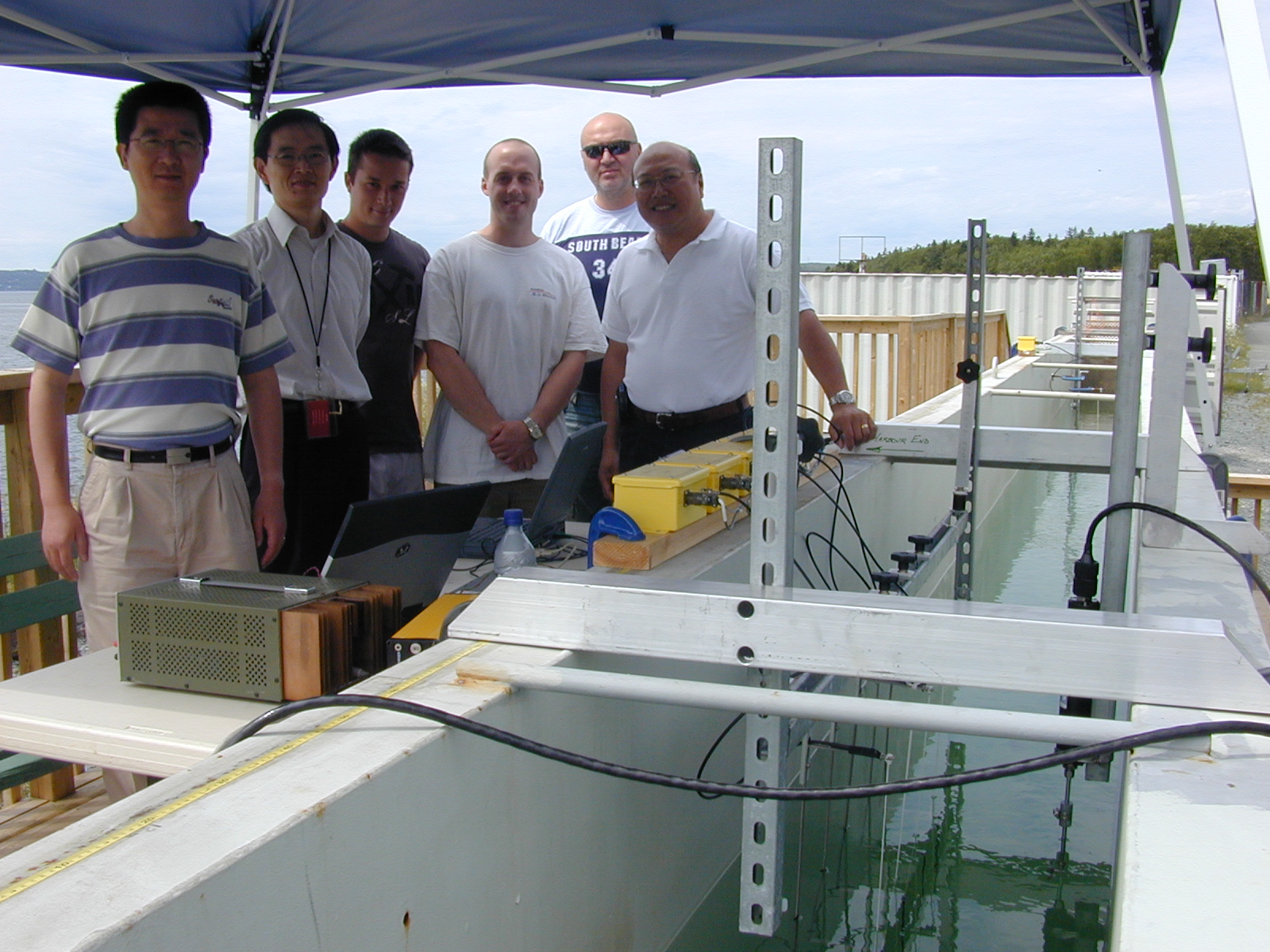
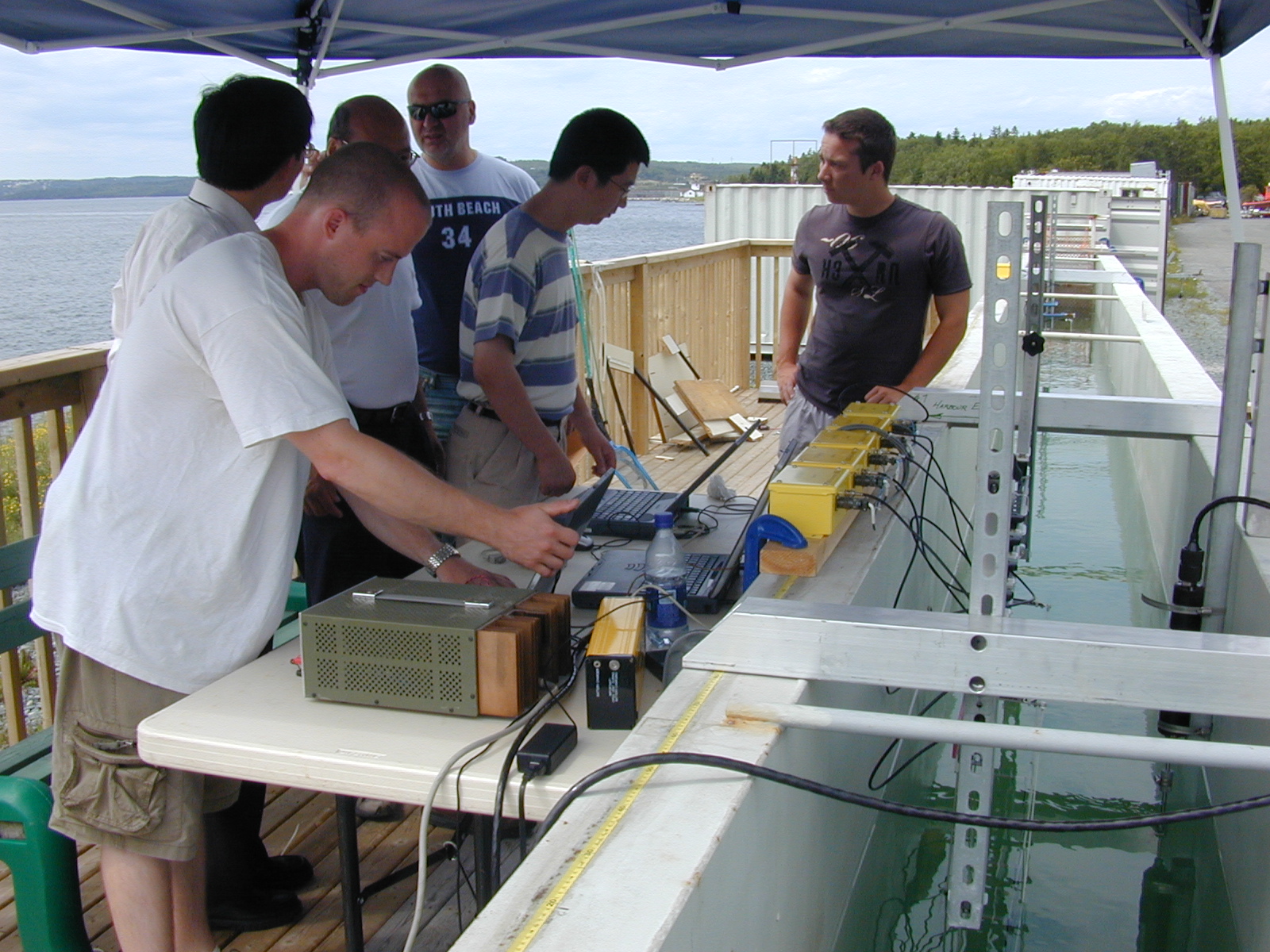

The Wave Tank Team
For other CNR Areas of Interest, Check out here.