Intelligent Electrochemical Gas sensing
...
Intelligent Electrochemical Gas sensing
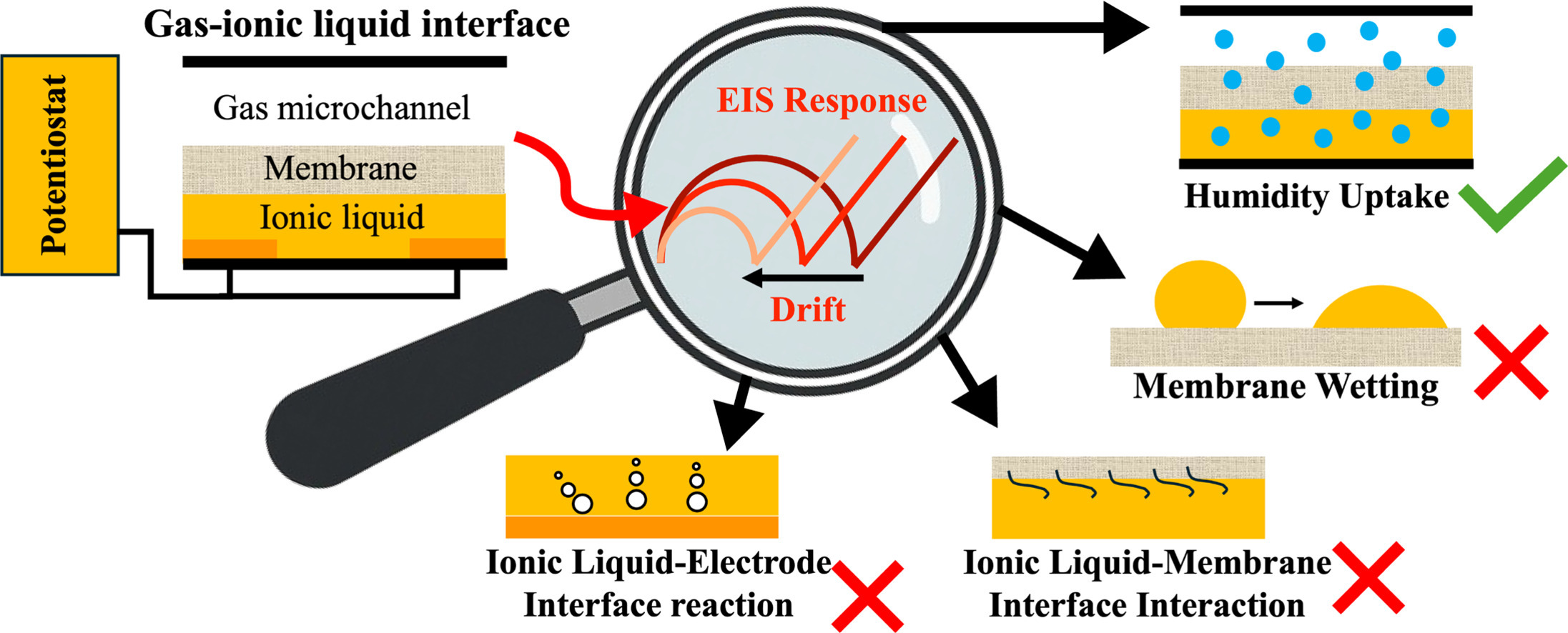
Our lab pioneers the development of AI/ML-integrated electrochemical sensors that eliminate the need for traditional equivalent circuit models (ECMs) in analyzing electrochemical impedance spectroscopy (EIS) data. This cutting-edge approach enhances the sensitivity, selectivity, and accuracy of chemical and biological sensing platforms by fully leveraging the rich information content across the entire impedance spectrum.
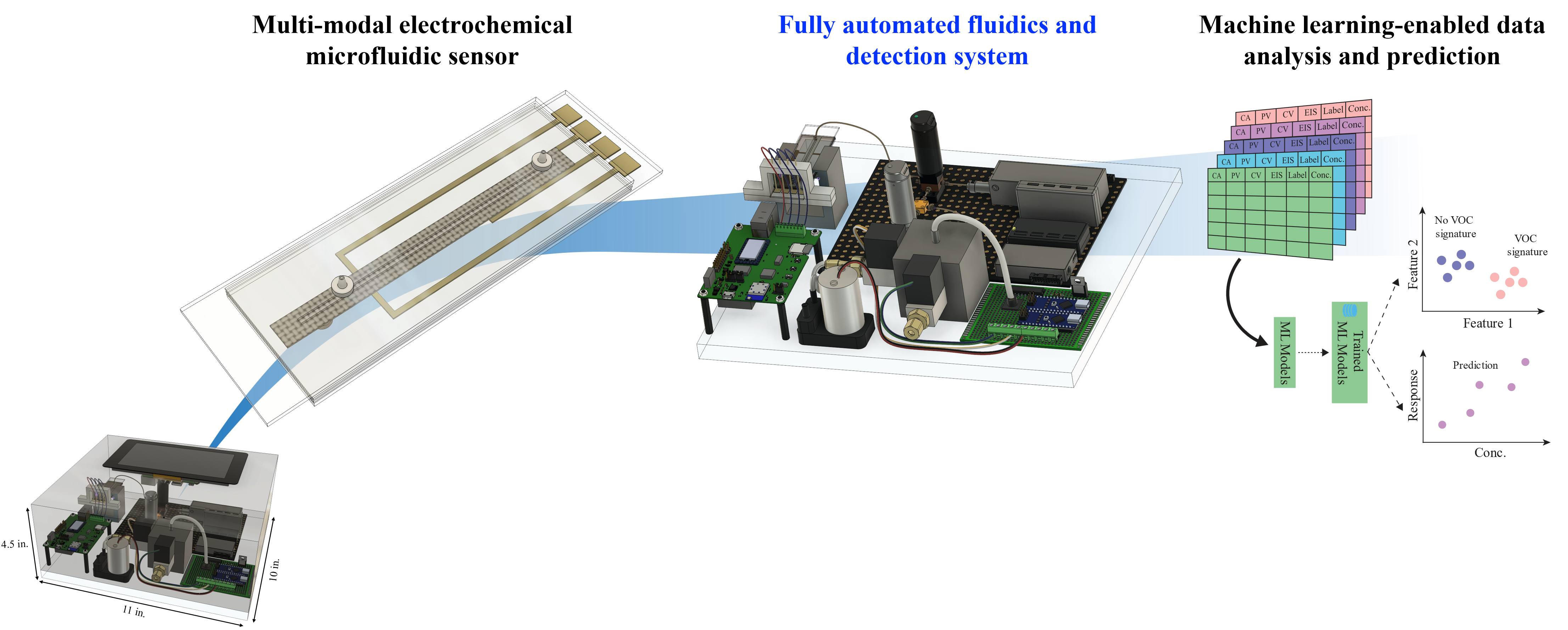
Key Innovations:
Machine Learning-Based Calibration:
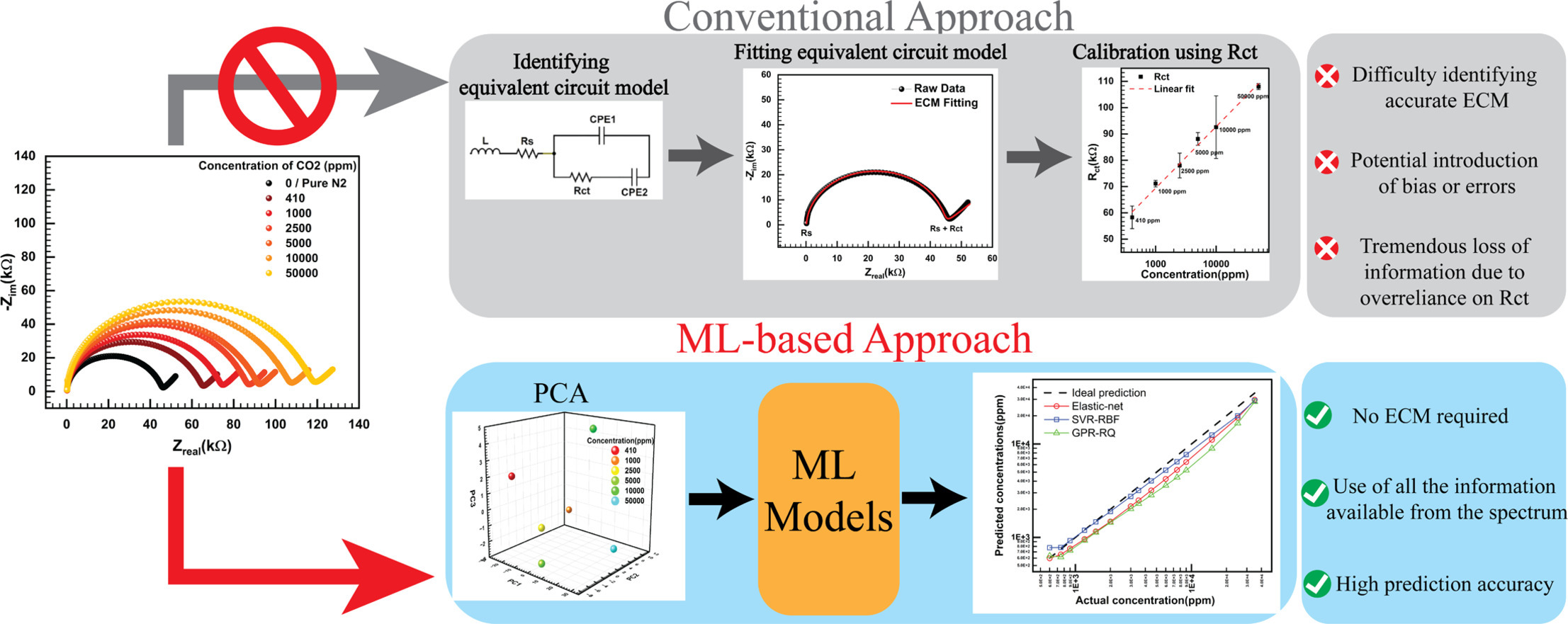
Instead of fitting complex EIS spectra to equivalent circuits (which introduces subjectivity, bias, and significant information loss), we apply supervised machine learning models to raw impedance data for direct and accurate concentration predictions.
Data-Driven Spectrum Analysis:
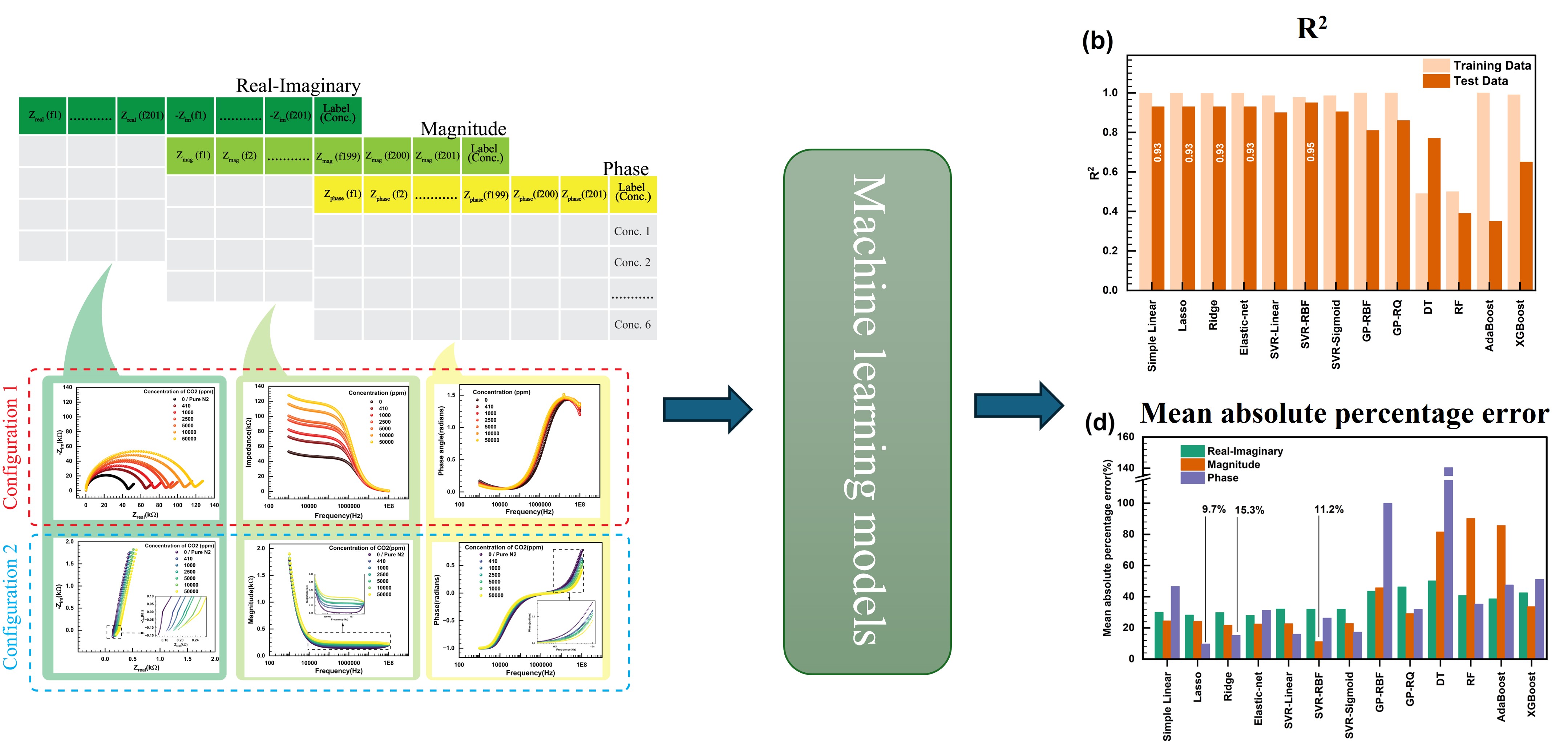
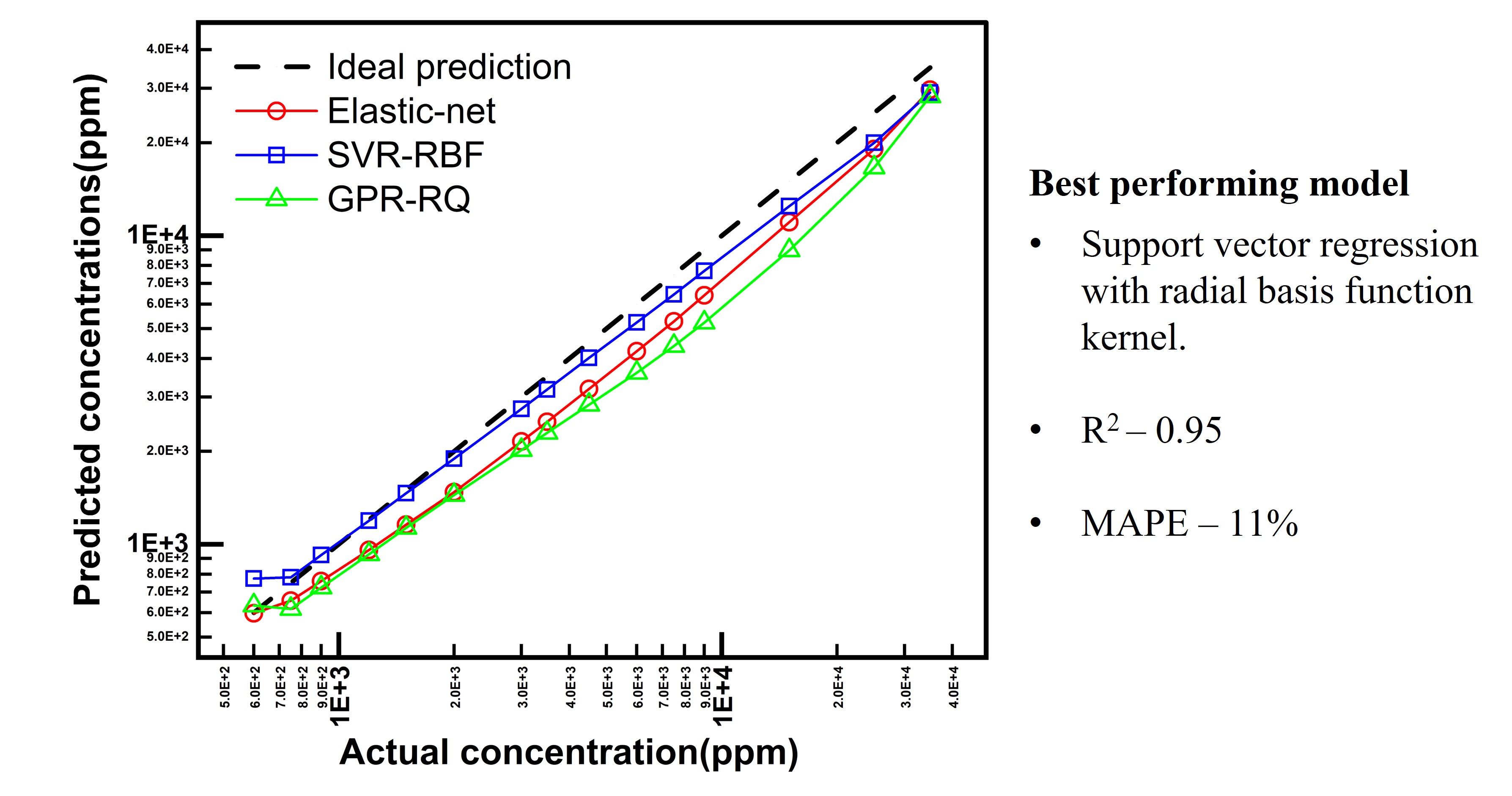
Principal Component Analysis (PCA) is employed to reduce dimensionality and extract the most informative features from EIS data—real/imaginary components, magnitude, or phase—before training models like Support Vector Regression (SVR) and Gaussian Process Regression (GPR).
High-Accuracy Predictions:
Our best-performing models trained on impedance magnitude achieved R² > 0.95 and mean absolute percentage errors (MAPE) as low as 10%, significantly outperforming conventional ECM-based calibration methods.
No Equivalent Circuit Required:
The ML-based framework eliminates the need to select and validate an ECM, avoiding model fitting inaccuracies and enabling generalization to new sensor platforms and electrolyte systems (e.g., ionic liquids).
Applications:
This intelligent biosensing strategy is being applied to:
- Gas sensors for environmental monitoring (e.g., CO₂ sensing using ionic liquids)
- Biosensors for DNA hybridization, bacterial detection, and heavy metal ions
- Field-deployable sensing in complex and resource-limited environments
Recent Publications:
1. Kaaliveetil, Sreerag, et al. "Utilizing machine learning for developing equivalent circuit-free calibration plots in impedimetric sensors." Electrochimica Acta (2025): 145732.
https://doi.org/10.1016/j.electacta.2025.145732
2. Kaaliveetil, Sreerag, Niranjan Haridas Menon, Najamuddin Naveed Khaja, Sushma Yadav, Saudagar Dongare, Burcu Gurkan, Kamalesh Sirkar, and Sagnik Basuray. "Unraveling the origin of electrochemical drift in membrane-based microfluidic electrochemical systems with gas-ionic liquid interface." Electrochimica Acta (2025): 147976.