Membrane-Mimic Microfluidic Platforms for Sensing and Characterization
...
Membrane-Mimic Microfluidic Platforms for Sensing and Characterization
Our Approach
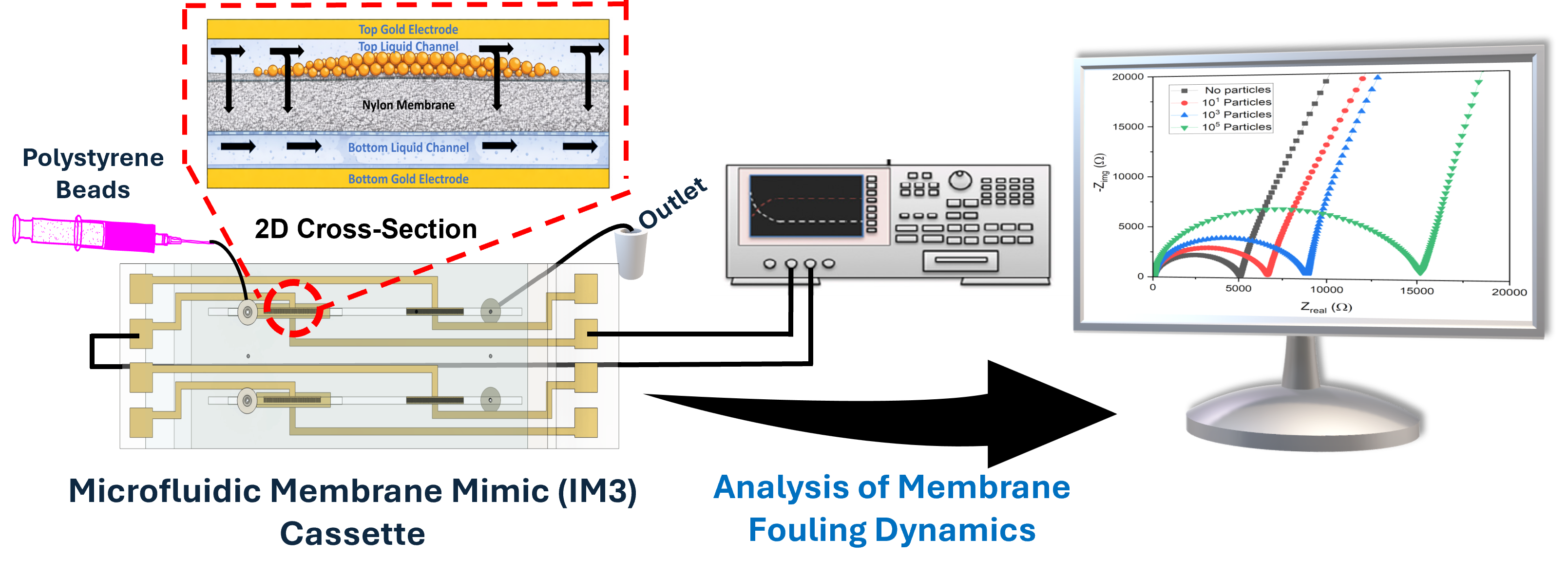
We design microfluidic platforms that replicate the structure and function of biological and synthetic membranes enabling precise, real-time analysis of transport dynamics, surface interactions, and fouling behavior under controlled flow conditions. These Membrane Mimic Microfluidic (MMM) systems integrate functional membranes into microchannels, where they serve both as separation media and active electrochemical sensing interfaces.
By coupling these platforms with electrochemical impedance spectroscopy (EIS), we non-invasively monitor changes in membrane-electrolyte interactions and fouling progression.
Key Capabilities
- Integrated Membrane Interfaces: Functional membranes embedded within microfluidic devices simulate filtration and surface-binding processes.
- Real-Time Impedance Monitoring: EIS captures changes in charge transfer resistance (Rct) associated with analyte accumulation, transport, or fouling events.
- Controlled Surrogate Models: Mimic biological foulants (e.g., bacteria, proteins) to study accumulation dynamics without biohazard risk.
Applications & Impact
Membrane mimic systems bridge fundamental membrane science and applied sensing by enabling direct visualization and quantification of key membrane phenomena, such as:
- Biofouling initiation and progression
- Membrane-electrolyte interaction characterization
- Selective analyte transport across functional barriers
- Real-time sensing of surface clogging or performance degradation
These platforms have a far-reaching impact across fields such as environmental engineering, biomedical diagnostics, water treatment, and pharmaceutical membrane processes, offering a miniaturized, data-rich alternative to traditional benchtop systems.
Recent Publication:
Khaja, Najamuddin Naveed, Sreerag Kaaliveetil, Niranjan Haridas Menon, Sushma Yadav, Chetan Prakash Sharma, and Sagnik Basuray. "3D Impedimetric Microfluidic Membrane-Mimic Cassette (IM3) with Interdigitated Electrodes for Fouling Analysis at Membrane Interfaces." ACS Applied Materials & Interfaces (2026).