NJIT to Expand National Research Portal, Receives $2.3 Million NSF Grant
There's a moment in every research lab when weeks, months or years of effort finally come together to confirm a hypothesis or produce a successful prototype. That moment is exhilarating for researchers, but the work doesn't stop there. Transforming lab results into far-reaching solutions for real-world challenges is a critical next step.
At New Jersey Institute of Technology, the Center for Translational Research (CTR) has proven itself a leader in bridging that gap, initiating and supporting strategies that help researchers and innovators turn their discoveries into tangible public benefits. Now, the National Science Foundation (NSF) has recognized CTR's leadership role with a $2.3 million grant for CTR to continue its work as the national coordinating center for all NSF Accelerating Research Translation (ART) programs.
Over the next five years, CTR will apply the funds toward growing a portal for coordinating and accelerating the commercialization pipeline for lab results from institutions of higher learning across the United States.
BioLargo Joins NJIT-Led Consortium to Advance PFAS Detection and Treatment Solutions
New Jersey Institute of Technology and BioLargo Inc. announced that the California-based environmental technology company has joined the New Jersey PFAS Partnership Innovation Consortium, an NJIT-led initiative working to accelerate the development, validation and deployment of solutions addressing per- and polyfluoroalkyl substances, commonly known as PFAS.
BioLargo will contribute its experience developing and commercializing technologies for PFAS detection and treatment, advanced water and wastewater treatment and other environmental challenges. Tonya Chandler, President of BioLargo Equipment, Solutions & Technologies Inc., will also join the NJ PFAS-PIC board of directors.
“We are excited to welcome BioLargo to NJ PFAS-PIC and to add its commercial technology experience to this growing partnership,” said Atam P. Dhawan, NJIT’s chief strategic innovation officer and senior vice provost for research, and executive director of NJ PFAS-PIC. “Its expertise will strengthen our ability to evaluate promising PFAS solutions, validate them under real-world conditions and advance them toward broader adoption by utilities, industries and communities for greater impact.”
Addressing Global PFAS Challenges Needs Partnerships Innovation Ecosystem
PFAS (per- and polyfluoroalkyl substances), often called “forever chemicals,” are found in everyday products and persist in groundwater, drinking water, wastewater, soil, consumable products and waste, food, and the environment. This family of chemicals poses serious public health risks including increased cholesterol, liver damage, thyroid disease, and can result in changes in the immune system. There’s also evidence suggesting a link between PFAS and decreased fertility, high blood pressure in pregnancy, lower birth weight, and increased risk of certain cancers.
The gravity of PFAS contamination has evolved to a critical global systemic challenge. It arises from the cyclic process of use of these chemicals, ranging from industrial manufacturing to consumable products and materials such as paint, wax, packing and construction materials to waste and groundwater to food, drinking water and environment. There are already more than estimated 15,000 PFAS chemicals and their bi-products that are being used in our society in different ways and systems around us. Their long-term health impacts and resistance to breakdown have made remediation especially complex. The PFAS crises is escalated at the national and global levels that can only be tackled through collaborative research and innovation partnerships engaging researchers, innovators and stakeholders from industry, businesses, government and communities at regional, national and global levels.
New NJ PFAS-PIC Consortium Launches to Accelerate PFAS Innovation, with PFASolve as Founding Member
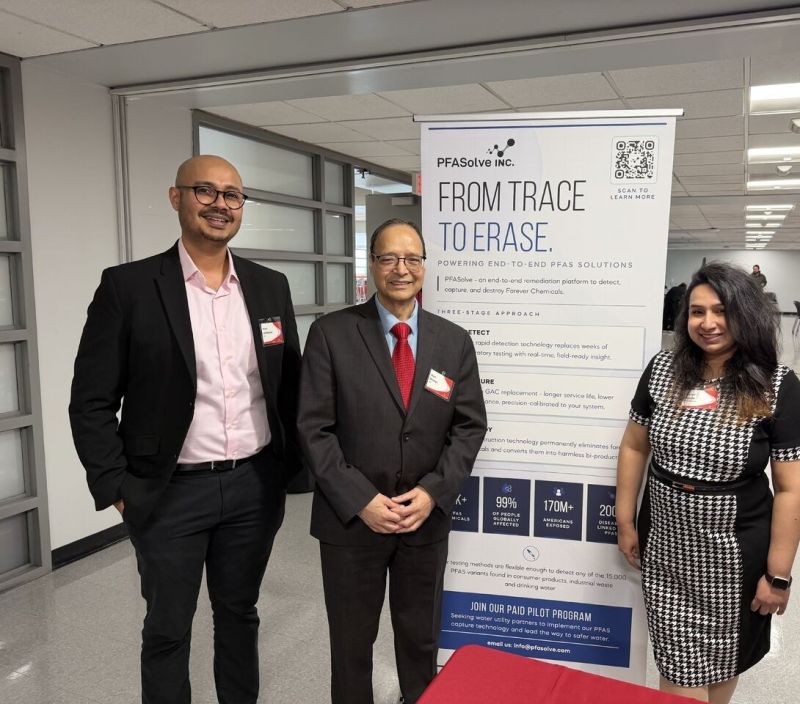
PFASolve is proud to announce its participation as a founding member of the New Jersey NJ PFAS-PIC (Partnership Innovation Consortium) , a first-of-its-kind collaboration, launched out of the New Jersey Institute of Technology - Center for Translational Research(https://research.njit.edu/ctr/), bringing together leading universities, water utilities, corporations, researchers, and environmental professionals dedicated to addressing the growing challenges posed by PFAS contamination. We also want to recognize Atam Dhawan for bringing this group together out his own commitment to societal change through scientific advancements.
Can NJ Be PFAS-Free? New Consortium Launches at NJIT to Eradicate 'Forever Chemicals'
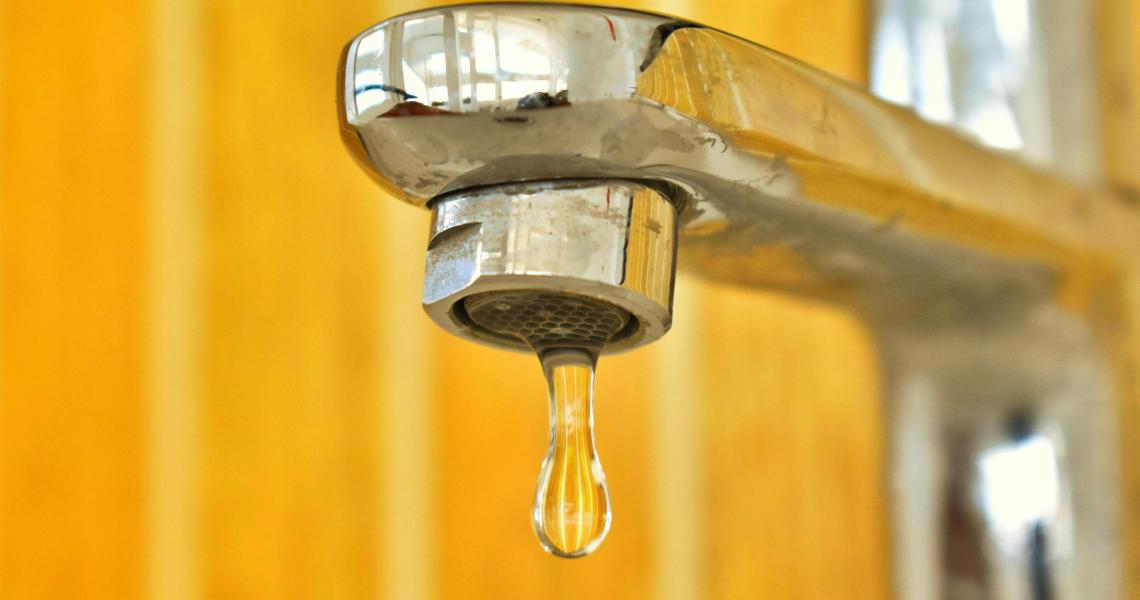
One of the most pervasive global pollution problems of the 21st century is a group of human-made chemicals called PFAS (per- and polyfluoroalkyl substances). Used since the late 1930s in consumer and industrial products to repel water and resist stains, these compounds earned the nickname "forever chemicals" because they don't naturally break down over time. As a result, PFAS has accumulated for decades in air, water and soil worldwide. About 45% of all tap water in the United States is estimated to contain PFAS, and PFAS has been identified in rivers and watersheds; in the deepest parts of the ocean; and in the Amazon rainforest.
PFAS Contamination Insight with Professor Arjun Venkatesan from NJIT
In recent years, growing attention has been placed on a class of chemicals known as PFAS—often referred to as “forever chemicals” due to their persistence in the environment and the human body. Found in everything from industrial sites to drinking water, these substances pose complex challenges for scientists, policymakers, and communities alike—especially in states like New Jersey, where contamination concerns are especially acute.
To better understand the scope of this issue and the science behind it, Ajun Venkatesan, Associate Professor of Civil and Environmental Engineering at New Jersey Institute of Technology, discusses over a decade of research experience, spanning the detection, capture, and destruction of PFAS in the environment. In this conversation, he breaks down why these chemicals are so difficult to manage, how they’ve spread globally—even to the most remote regions—and what it will take to effectively address their impact.
From cutting-edge technologies to the realities of contamination in New Jersey, this interview offers a clear and urgent look at one of today’s most pressing environmental challenges.
NJIT's Center for Translational Research Quickens Technology's Pace to Market
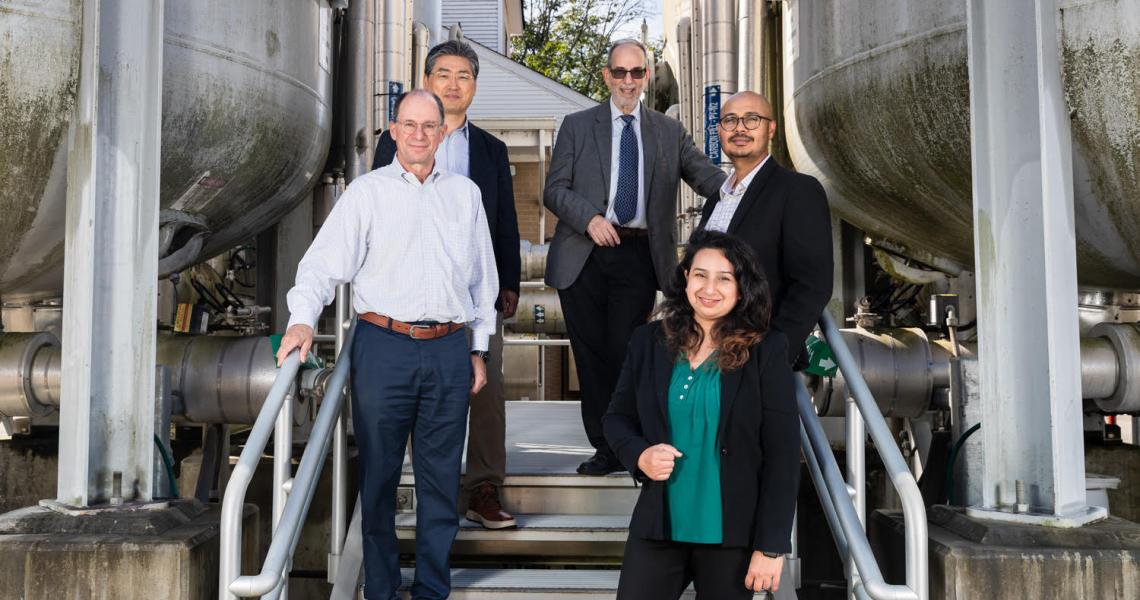
Richard Calbi, director of Ridgewood Water, was astonished to discover the extent of PFAS contamination in New Jersey drinking water when the state adopted pollution standards for the industrial chemicals in 2020.
“The first thing we did was determine if we were affected and found them in every one of our 52 groundwater wells. We couldn’t find water to buy that didn’t have PFAS in it. We had to reimagine and rebuild our entire system to accommodate new filters,” Calbi said.
NJIT and NJII Launch PureTrace Labs to Commercialize PFAS Detection Technology
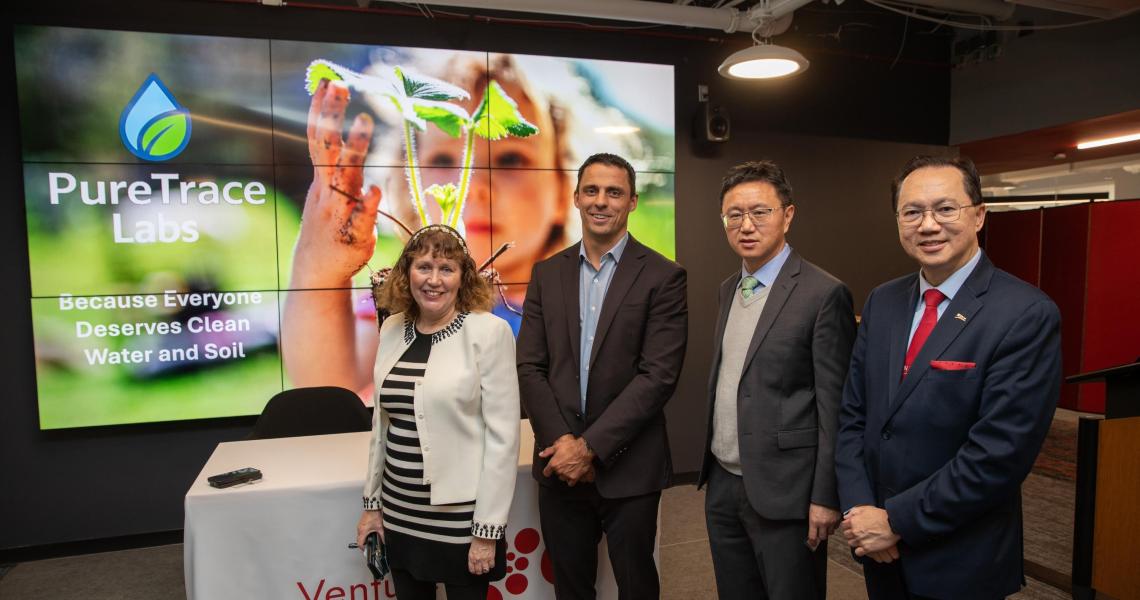
New Jersey Institute of Technology (NJIT) and the New Jersey Innovation Institute (NJII) today announced the launch of PureTrace Labs, a startup created to bring NJIT-developed technology for rapid detection of per- and polyfluoroalkyl substances (PFAS) to market.
The company marks the first official launch from NJII’s Venture Studio, supported by an investment of up to $1 million.
NJIT and NJII Launch PureTrace Labs
New Jersey Institute of Technology (NJIT) and the New Jersey Innovation Institute (NJII) have announced launch of PureTrace Labs, a startup created to bring NJIT-developed technology for rapid detection of per- and polyfluoroalkyl substances (PFAS) to market. The company marks the first official launch from NJII’s Venture Studio, supported by an investment of up to $1 million.
The launch event took place at the Profeta Center for Innovation and Entrepreneurship, where leaders from NJIT and NJII formalized the agreement through an exclusive startup license for NJIT Technology ID 24-016, “Method for Rapid Detection of PFAS.” The license was signed on NJIT’s behalf by NJIT President Teik Lim and NJII President Michael Johnson for PureTrace Labs.
NJIT And NJII Launch PureTrace Labs To Commercialize PFAS Detection Technology
New Jersey Institute of Technology (NJIT) and the New Jersey Innovation Institute (NJII) today announced the launch of PureTrace Labs, a startup created to bring NJIT-developed technology for rapid detection of per- and polyfluoroalkyl substances (PFAS) to market.
The company marks the first official launch from NJII’s Venture Studio, supported by an investment of up to $1M.
NJIT innovation goes to market: PureTrace Labs launched to bring rapid PFAS detection technology to market
The New Jersey Institute of Technology (NJIT) and the New Jersey Innovation Institute (NJII) have announced the official launch of PureTrace Labs, a startup poised to revolutionize the detection of harmful PFAS—or “forever chemicals”—in the environment.
This launch marks a significant milestone for NJIT’s innovation pipeline, as PureTrace Labs is the first official venture spun out of NJII’s Venture Studio, an initiative backed by an investment of up to $1 million. The new company will commercialize an NJIT-developed technology that can rapidly detect PFAS in water, soil, and packaging materials in under three minutes.
‘Forever chemicals’ a problem everywhere in NJ, panelists say
PFAs have been linked to certain cancers and fertility issues
Ted Goldberg | May 1, 2025 | Water, Energy & Environment
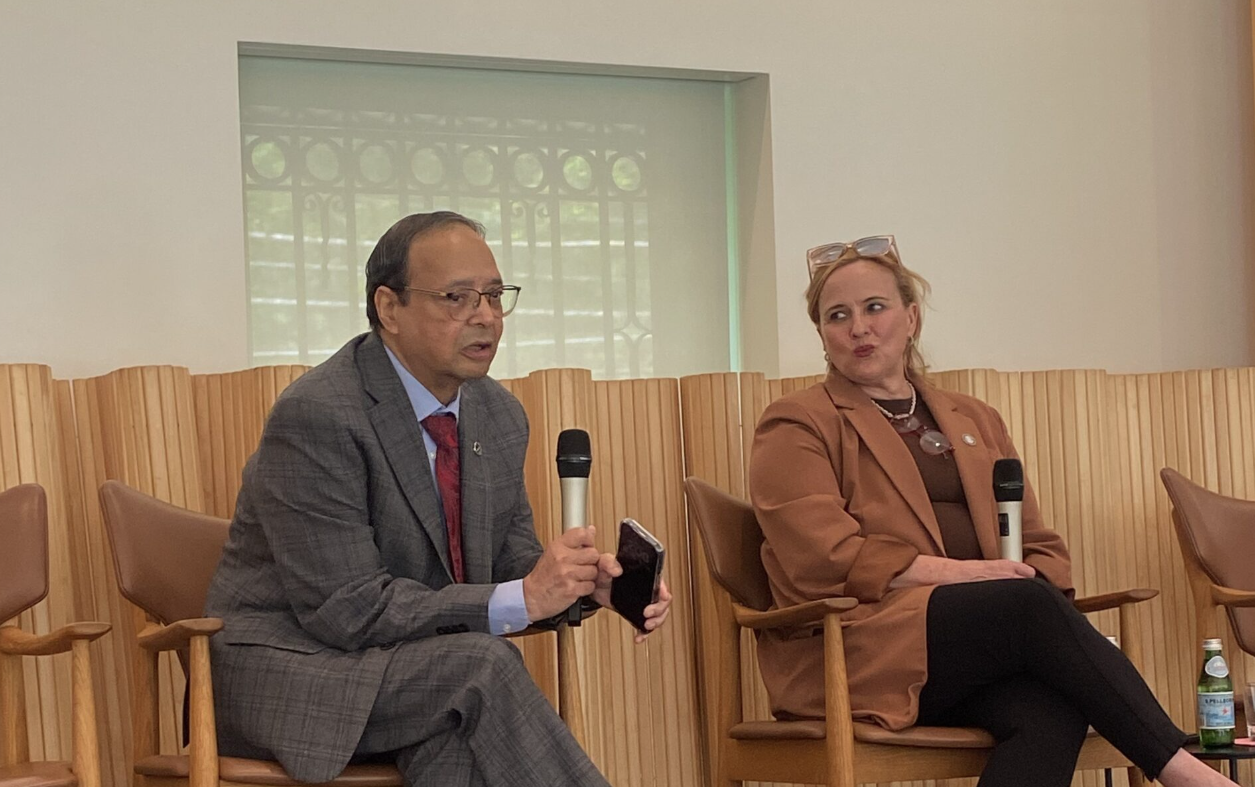
Last week, the New Jersey Institute of Technology hosted a conference focused on PFAs, or forever chemicals, and the costs of dealing with them – or ignoring them.
“This is not a rural problem. It’s not a suburban problem. It’s not an urban problem or an agricultural problem. It’s a problem across every sector,” said Sen. Paul Sarlo (D-Union.)
“We’re not talking about some abstract environmental issue,” said Assemblywoman Lisa Swain (D-Bergen.) “We’re talking about families in my own district who worry about what’s coming out of the tap.”
Studies have shown that exposure to PFAs can contribute to certain cancers and fertility issues, but the costs to filter them out of water supplies can be daunting. Veolia North America, which supplies about a million New Jerseyans, recently spent tens of millions of dollars to upgrade a water treatment plant in Delaware to conform with federal PFA standards.
“Not only is a PFAs treatment system intensive from a capital standpoint, you have to think about operating it over the long term, which is a costly endeavor as well,” said Chris Low, chief technology officer at Veolia North America. “So we’re always looking at how do we operate in a way that optimizes those costs.”
Veolia has requested a rate increase in Delaware of more than 40% per customer, mostly to pay for the upgraded water treatment plant. Leaders at the New Jersey panel said they hope the recent conference will be a springboard for other talks related to PFAs and remediation.
This work was partially supported by a U.S. National Science Foundation Accelerating Research Translation cooperative agreement (TIP-2331429) and the NJIT Center for Translational Research. The opinions, findings, and conclusions, or recommendations expressed are those of the author(s) and do not necessarily reflect the views of the National Science Foundation.
