Need information about this facility
Location
Need location for this facility
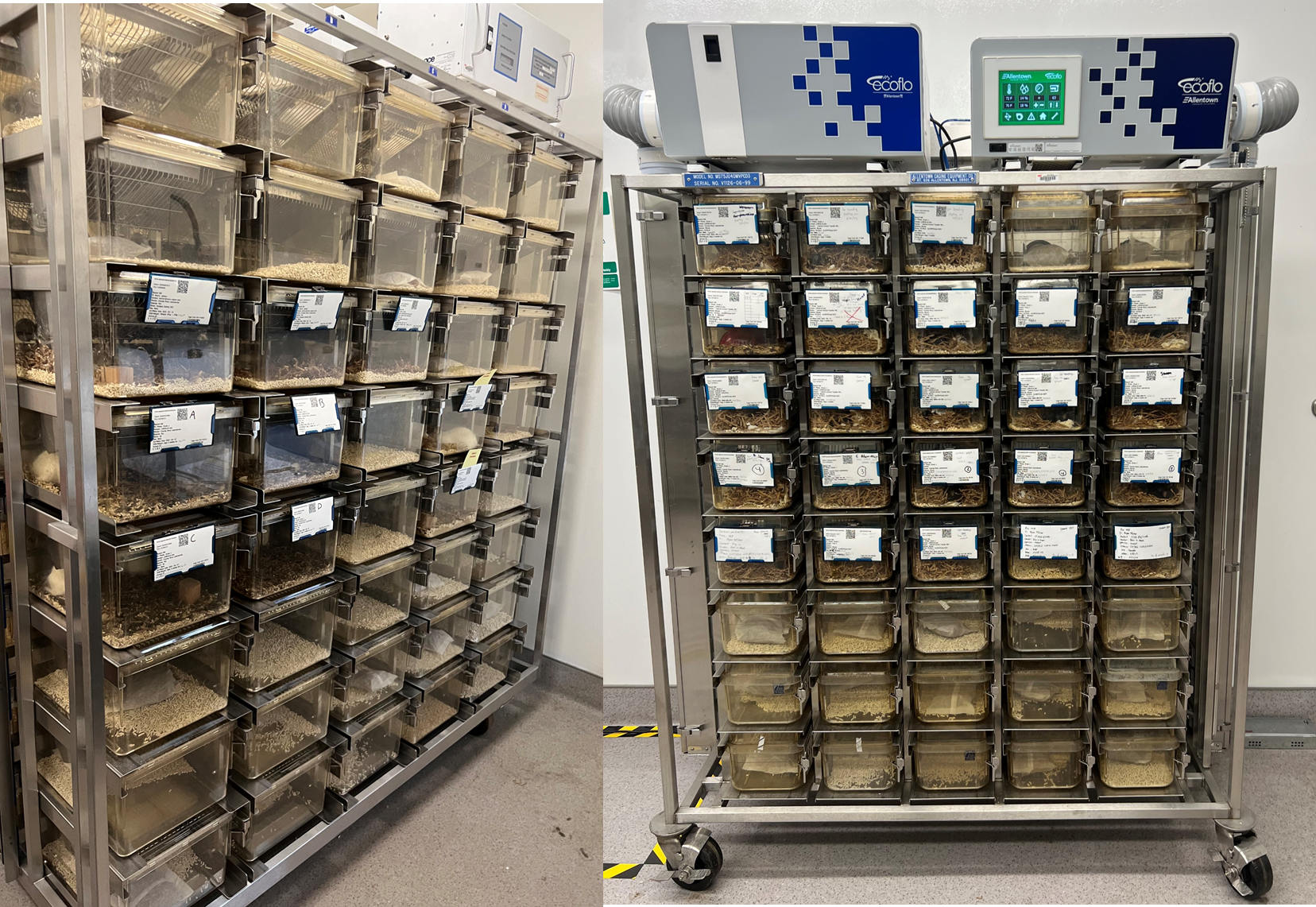
Animal Storage Cage/ Habitation Chamber
Animal Storage Cage/ Habitation Chamber is where the rodent test subjects are kept and cared for before they are used in various testing.
The center (CIBM3) houses an animal satellite facility exclusively for the CIBM3 users and is approved by the Institutional Animal Care and Use Committee of Rutgers University. The satellite facility is equipped with automatic 12:12hr light dark cycle and (air cycles - and add any other special things). In the current setting, the facility can house up to 60 animals (rats) for a period of 2 months (Refer to figure 19).
The center (CIBM3) houses an animal satellite facility exclusively for the CIBM3 users and is approved by the Institutional Animal Care and Use Committee of Rutgers University. The satellite facility is equipped with automatic 12:12hr light dark cycle and (air cycles - and add any other special things). In the current setting, the facility can house up to 60 animals (rats) for a period of 2 months (Refer to figure 19).
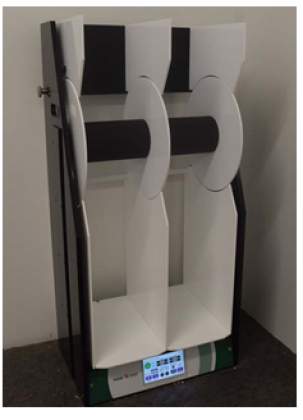
Rotarod
The Rotarod is used in motor skills tests in rats such as evaluating balance, grip strength, and motor coordination.
The Center recognizes the diverse array of behavioral changes that may occur following brain injury. Hence, the center is fully equipped to perform assays to determine deficits in motor co-ordination, memory, anxiety and sleep. More specifically, the Rotarod (Make and model) is a performance test based on a rotating rod with forced motor activity being applied by the test animal (rat). The test measures parameters such as balance, grip strength and motor coordination of the subjects; especially in testing the effect of brain injury.
The Center recognizes the diverse array of behavioral changes that may occur following brain injury. Hence, the center is fully equipped to perform assays to determine deficits in motor co-ordination, memory, anxiety and sleep. More specifically, the Rotarod (Make and model) is a performance test based on a rotating rod with forced motor activity being applied by the test animal (rat). The test measures parameters such as balance, grip strength and motor coordination of the subjects; especially in testing the effect of brain injury.
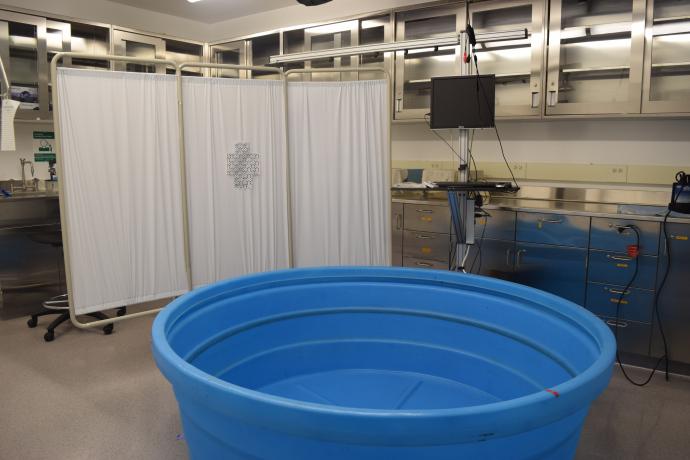
Morris Water Maze
The Morris Water Maze is a behavioral test used with rodents. The Morris Water Maze measures the subject spatial memory, movement control and cognitive mapping.
The Morris water maze is a behavioral tool used to study spatial learning and memory. The basic procedure for this task is that the rat is placed in a large circular pool and is required to find an invisible platform that allows it to escape the water by using various cues. The animal is given several rounds of training before the actual testing day. The escape latency, which is the time it takes to find the platform is noted. In normal animal, the escape latency improves with each training cycle. Hence, an extension of this latency suggests a cognitive decline or deficit in spatial learning/ memory.
The Morris water maze is a behavioral tool used to study spatial learning and memory. The basic procedure for this task is that the rat is placed in a large circular pool and is required to find an invisible platform that allows it to escape the water by using various cues. The animal is given several rounds of training before the actual testing day. The escape latency, which is the time it takes to find the platform is noted. In normal animal, the escape latency improves with each training cycle. Hence, an extension of this latency suggests a cognitive decline or deficit in spatial learning/ memory.
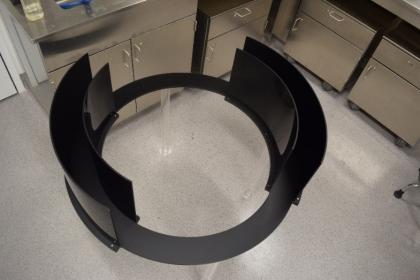
Elevated Zero Maze
The Elevated zero maze is used to asses anxiety-like behavior in rodents. Anxiety-related behavior is measured by the degree to which the rodent avoids the unenclosed areas of the maze
The Elevated Zero Maze (EZM) and Elevated plus maze (EPM) are used to text anxiety based on the general aversion of rodents to open spaces. The elevated zero maze (EZM) is an elevated circular runway with alternating open light areas and enclosed dark areas. The continuous nature of this apparatus eliminates the problem of the EPM in how to account for the animal's presence in the center area of the EPM. The test uses an elevated, plus-shaped (+) apparatus with two open and two enclosed arms. Anxiety indicated by an increase in the proportion of time spent in the closed spaces as opposed that spent in the open spaces.
The Elevated Zero Maze (EZM) and Elevated plus maze (EPM) are used to text anxiety based on the general aversion of rodents to open spaces. The elevated zero maze (EZM) is an elevated circular runway with alternating open light areas and enclosed dark areas. The continuous nature of this apparatus eliminates the problem of the EPM in how to account for the animal's presence in the center area of the EPM. The test uses an elevated, plus-shaped (+) apparatus with two open and two enclosed arms. Anxiety indicated by an increase in the proportion of time spent in the closed spaces as opposed that spent in the open spaces.
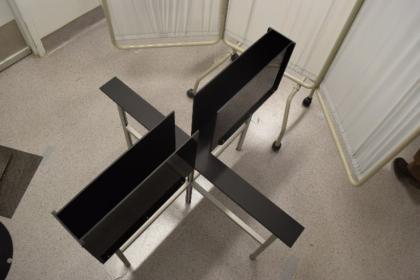
Elevated Plus Maze
The Elevated plus maze is another maze used to test anxiety levels in laboratory rodents. The rodent’s aversion to moving in the un-enclosed spaces is used to measure the anxiety levels of the rodent.
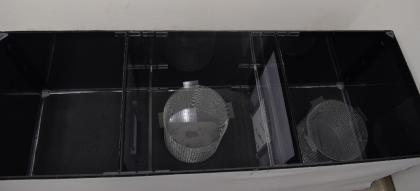
Rat Sociability Chamber
The Rat 3-Chambered Sociability device was custom built in our laboratory to assess the social behavior in rodents.
This 3 chambered device is a fantastic contraption for researchers studying socialization who require an apparatus in which variables may be altered to change the premises of the experiment. The three‐chamber test is a commonly used method to measure social approach behavior in rodents. After adaptation to the thee-chamber arena, animal is released into the middle chamber and allowed to explore the other compartments. In the adjacent animal compartment a docile stimulus animal is situated in a mesh-wire container, while in the other adjacent compartment a similar container is located without stimulus animal (object compartment). The tendency to approach or avoid the compartment with the stimulus animal provides a measure of sociability.
This 3 chambered device is a fantastic contraption for researchers studying socialization who require an apparatus in which variables may be altered to change the premises of the experiment. The three‐chamber test is a commonly used method to measure social approach behavior in rodents. After adaptation to the thee-chamber arena, animal is released into the middle chamber and allowed to explore the other compartments. In the adjacent animal compartment a docile stimulus animal is situated in a mesh-wire container, while in the other adjacent compartment a similar container is located without stimulus animal (object compartment). The tendency to approach or avoid the compartment with the stimulus animal provides a measure of sociability.
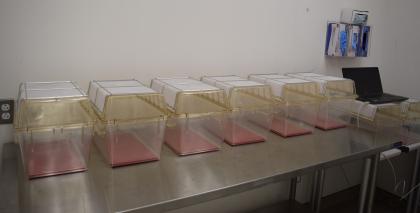
Sleep Room
The continuous sleep monitoring rodent cages and rodent beds equipped with piezoelectric sensors that are capable of monitoring 24 h cycle of sleep patterns .
The PiezoSleep rat Behavioral Tracking System is a complete solution to monitor and analyze data regarding sleep/wake cycles in rodents. This is a non-invasive method to monitor sleep/wake cycles which is based on piezoelectric sensor technology. The Piezoelectric polymer film transforms mechanical pressure into electrical signals with >95% accuracy The data acquired using this system increases the statistical power of rat sleep patterns by using multiple cages interconnected with single data acquisition system.
The system contains Customized Open-Floor Cages, Non-invasive PizeoFloor Sensors (PZ-77), Cage Amplifiers [based on cage quantity] (PZ-100), and Data Acquisition Sensors (DAQ). The system, when integrated, provides proven accurate sleep/wake analysis in lab animals, and eliminates the need for human scoring. The piezoelectric floor pads in cages provide a non-invasive alternative to monitor and test mice during sleep, upon wake and throughout “normal” sleep activity. Cages can be customized to suit a variety of needs and can accommodate differential feeding, watering, stimulus adapters, etc. Each individual cage and complete system is thoroughly tested and comes calibrated to suit your project needs.
The PiezoSleep rat Behavioral Tracking System is a complete solution to monitor and analyze data regarding sleep/wake cycles in rodents. This is a non-invasive method to monitor sleep/wake cycles which is based on piezoelectric sensor technology. The Piezoelectric polymer film transforms mechanical pressure into electrical signals with >95% accuracy The data acquired using this system increases the statistical power of rat sleep patterns by using multiple cages interconnected with single data acquisition system.
The system contains Customized Open-Floor Cages, Non-invasive PizeoFloor Sensors (PZ-77), Cage Amplifiers [based on cage quantity] (PZ-100), and Data Acquisition Sensors (DAQ). The system, when integrated, provides proven accurate sleep/wake analysis in lab animals, and eliminates the need for human scoring. The piezoelectric floor pads in cages provide a non-invasive alternative to monitor and test mice during sleep, upon wake and throughout “normal” sleep activity. Cages can be customized to suit a variety of needs and can accommodate differential feeding, watering, stimulus adapters, etc. Each individual cage and complete system is thoroughly tested and comes calibrated to suit your project needs.